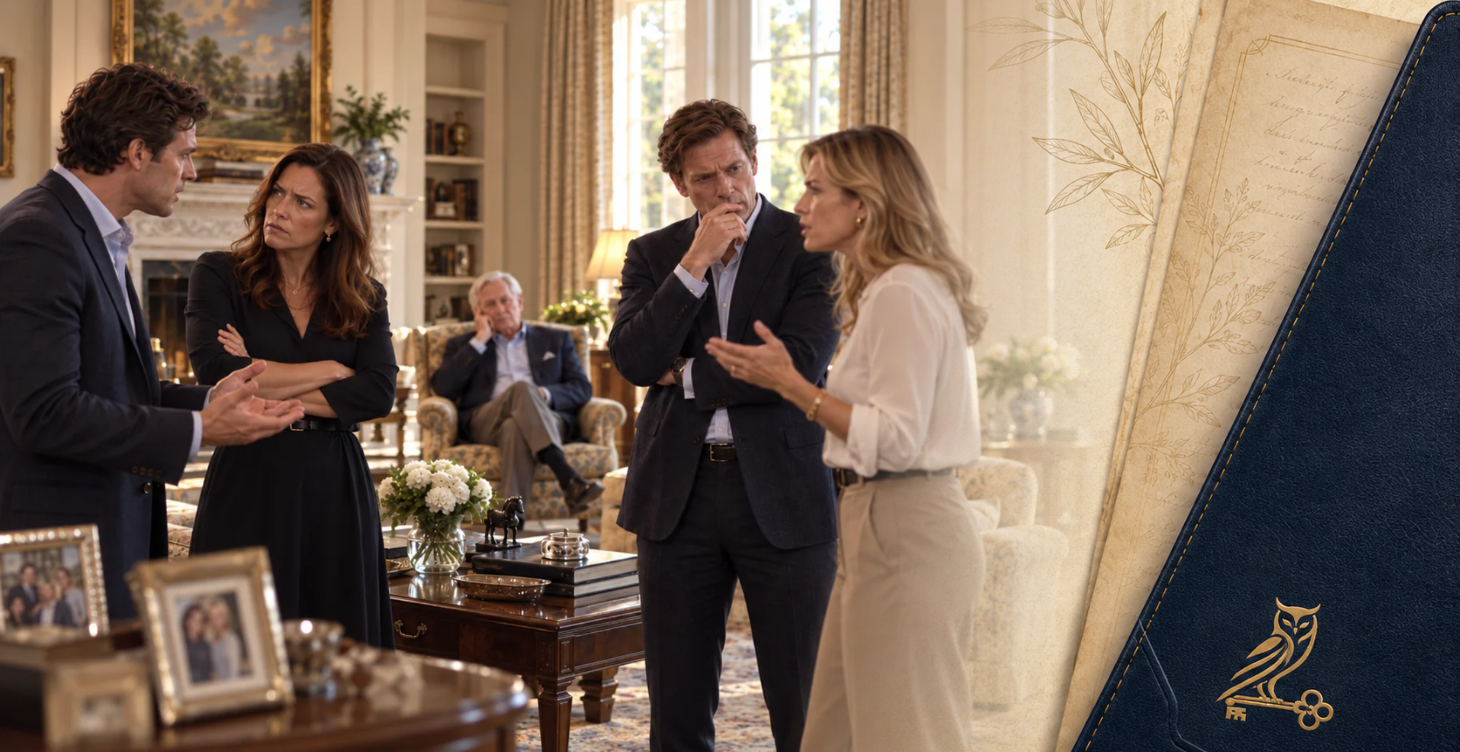

Most people do not avoid legacy conversations because they do not care.
They avoid them because these type of family conversation feel loaded.
They do not want to sound controlling.
They do not want to upset the people they love.
They do not want to trigger conflict.
They do not want to talk about aging, decline, death, money, or who gets what.
So they postpone the conversation and tell themselves the documents will cover it.
But the documents do not cover all of it.
Because a trust can move assets.
It cannot explain your heart.
And that is the part most families discover too late.

Why Documents Alone Are Not Enough
Legal documents matter.
They help create structure, authority, and clarity around what should happen.
But they do not answer every human question the family will still carry.
Why did you choose this trustee?
Why did you structure things this way?
Why is one beneficiary receiving something different?
What did you want us to understand about this decision?
What would you want said in an emotional moment?
What did you hope this legacy would mean, not just financially, but personally?
When those questions go unanswered, the family is left to guess.
They guess what you meant.
They guess why you made a choice.
They guess what should be said to others.
They guess how to explain a hard decision in a painful moment.
That burden is heavier than most people realize.
Most People Think Communication Is Logistics. It Isn’t.
When people do think about family conversation, they often reduce it to the practical basics.
Where are the documents?
Who should call the attorney?
What account goes where?
Who is in charge?
Those things matter.
But legacy communication is much more than logistics.
Your family may need instructions, yes.
But they may also need context.
They may need reassurance.
They may need encouragement.
They may need to hear your voice one more time in a moment that matters.
They may need help understanding not just what you decided, but who you were trying to protect, what you valued, and how you hoped they would carry things forward.
That is why family conversation belongs inside legacy planning, not outside it.
The Conversation Most Families Wait Too Long to Have
The conversation most families avoid is not just “who gets what.”
It is the deeper conversation underneath it:
Here is what matters to me.
Here is why I made these choices.
Here is who I have asked to help.
Here is how I hope this supports the family.
Here is what I want you to know now, while I can still say it clearly.
That family conversation often gets delayed until something forces it — a diagnosis, an emergency, rising conflict, or a death.
By then, it is harder.
Emotions are higher.
Defensiveness is stronger.
Clarity is lower.
Time is shorter.
The conversation that could have felt thoughtful and grounding begins to feel reactive and painful.
That is why earlier matters.
Legacy Communication Is Not One Family Conversation
One of the biggest insights families miss is that legacy communication is not a single speech around the kitchen table.
It is many conversations for many people at many moments.
A beneficiary may need to know why you created the trust.
A trustee may need clarity and encouragement about the role you have asked them to serve in.
A spouse may need instructions for what to open now, what to wait to read later, and what you most want them to remember.
A child may need context around a choice that might otherwise feel personal.
A grandchild may receive a message meant for a milestone you can already see coming.
A family member may need an emergency letter if you are ever incapacitated.
A charity may need your intentions explained clearly.
A business partner or shareholder may need transition language that protects relationships as much as operations.
That is why legacy communication cannot be reduced to one generic family letter.
A family is too human for that.
Some Messages Are Practical. Some Are Deeply Personal.
This is where legacy planning becomes more than administration.
Some messages are practical.
They help explain what is happening, what role someone now carries, what documents matter, and how decisions should be understood.
Those messages reduce confusion.
But other messages are much more personal.
A child may need a private note that says something you found hard to say out loud.
A loved one may need a blessing, a reassurance, or even an apology.
A grandchild may one day receive a message tied to a graduation, a wedding, or another life milestone.
A future generation may receive a letter that passes down values, not just wealth.
That kind of communication does not just transfer information.
It transfers humanity.
And in many families, that is what people remember longest.
Why Silence Costs So Much
When families do not have this kind of communication, the consequences are usually not immediate paperwork errors.
They are relational.
The trustee feels alone.
The spouse feels unsure.
The children assign motives to decisions they do not understand.
A beneficiary interprets structure as rejection instead of protection.
A family conflict that could have been softened by context becomes sharper because no one has language for what was intended.
This is part of why good plans still fail emotionally.
The assets move.
But the meaning gets lost.
The instructions exist.
But the heart behind them does not.
That silence creates pain no legal document can fully solve afterward.
How to Start the Family Conversation Earlier
The goal is not to gather everyone and force one giant emotional summit.
The goal is to begin earlier, calmer, and more intentionally.
Start with purpose, not details.
You do not have to begin with, “Here is what everyone gets.”
You can begin with, “I want to make life easier on this family later.”
You can say, “I want to explain some of the thinking behind my plan while I still can.”
You can say, “I do not want you left guessing if something changes.”
You can say, “This is about clarity, not control.”
That changes the tone immediately.
Then move into the right layers.
Who is in charge if something changes?
What support is in place?
What should the family understand?
What conversations still need to happen?
What letters or messages should exist for the moments you can already anticipate?
The point is not perfection.
It is preparation.
Why Family Conversation Matters During Life, Too
Family conversations are not only about after death.
It also matters in the quiet phase of aging.
In that season, families often feel trapped between respect and concern.
They do not want to take away independence. But they also do not want to ignore what may be changing.
That is where earlier communication becomes a gift.
When expectations, values, roles, and wishes have already been discussed, a family can increase support more gradually and more respectfully.
They are not inventing the plan under pressure.
They are following a path that has already been named.
That preserves dignity.
And it protects relationships.
Your Family Needs More Than Documents
The families who do this well understand something important:
A legacy is not only made of assets.
It is also made of explanation, intention, memory, reassurance, and voice.
Your family may one day need legal documents.
But they may also need to know what you meant.
They may need to hear what mattered to you.
They may need to understand why your plan looks the way it does.
They may need something to hold onto when emotions are high and your voice is no longer in the room.
That is why this family conversation matters so much.
Because a trust can move assets.
It cannot explain your heart.
Only you can do that.
And the best time to do it is before the moment arrives when everyone wishes you had.
We have put together a package of over two-dozen letters you likely would like to write. They are available for you to see immediately within the Legacy Lock Toolkit. You can learn more about the Legacy Lock Toolkit here.
Or, if you would like to consider this topic may, please check out our Family Communication Guide.