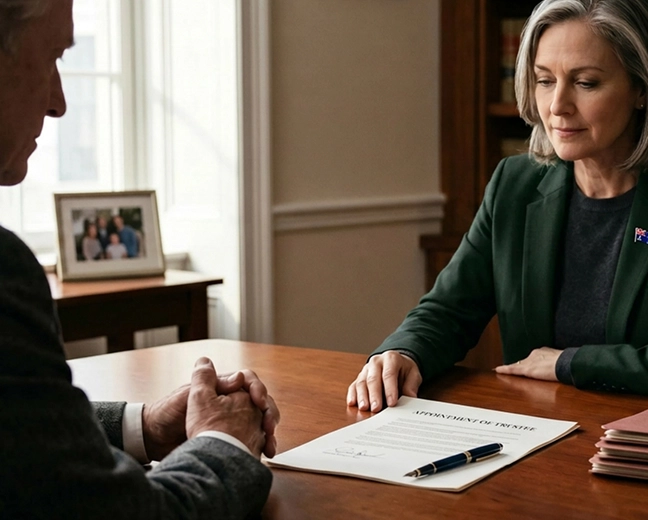
Many estate planning attorneys ask,
“Who do you want as trustee?”
Most families answer too quickly.
A trustee is not just the person you love most. And it is not just the most responsible child.
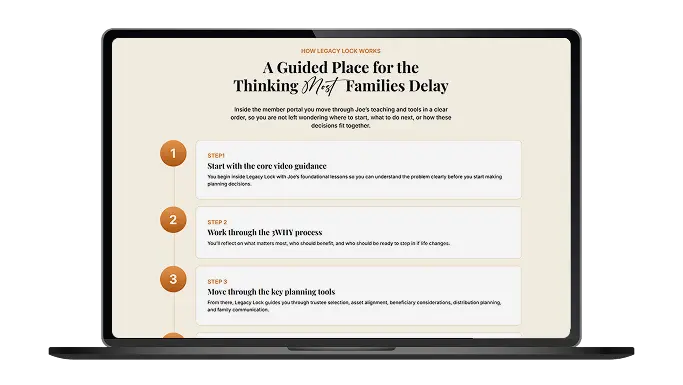
A trustee may need to manage assets, communicate with beneficiaries, follow your wishes, handle pressure, make hard calls, and stay steady when emotions are high. The trustee worksheet within the Legacy Lock membership portal and the Legacy Lock Toolkit makes that clear: this role requires impartiality, financial and legal judgment, emotional intelligence, and the ability to navigate conflict.
That is a very different job than simply being a loving son, daughter, spouse, or sibling.

The person most focused on your care and
well-being is not always the right person to manage your trust.
A child who loves you deeply may be the one sitting by your hospital bed, helping with doctors, worrying about your health, and trying to hold the family together. Asking that same person to also manage your assets, communicate your wishes, handle distributions, and sit in the middle of family tension can put an enormous weight on them.
Too often, trustee selection is treated like a simple form question.
Who do you want?
Who is the responsible one?
Who should go first?
And just like that, a major decision is made.
To point that plainly, appointing a trustee is more than choosing someone you trust. It is about choosing someone with the ability, integrity, and resilience to manage the estate, navigate conflict, and protect beneficiaries.
The result is often the same: a role that was never fully thought through gets locked in anyway.
The better question is not: Who do I trust?
The better question is: Who is actually equipped to carry this role well and what support structure should be around them?
For some families, that may mean a child is not the sole answer.
It may mean a co-trustee.
It may mean a trust protector or oversight structure.
It may mean one committee for support during life and a different structure after death.
It may mean the most loving choice is not putting one loved one in the middle of everything.
The point is not to make the decision harder.
The point is to make it more honest.
Most families are never shown how much this decision can affect the people they love.
If you want to think more carefully about trustee selection, family roles, and how to put the right structure in place before a crisis or death forces the issue, our resources can help you go deeper.