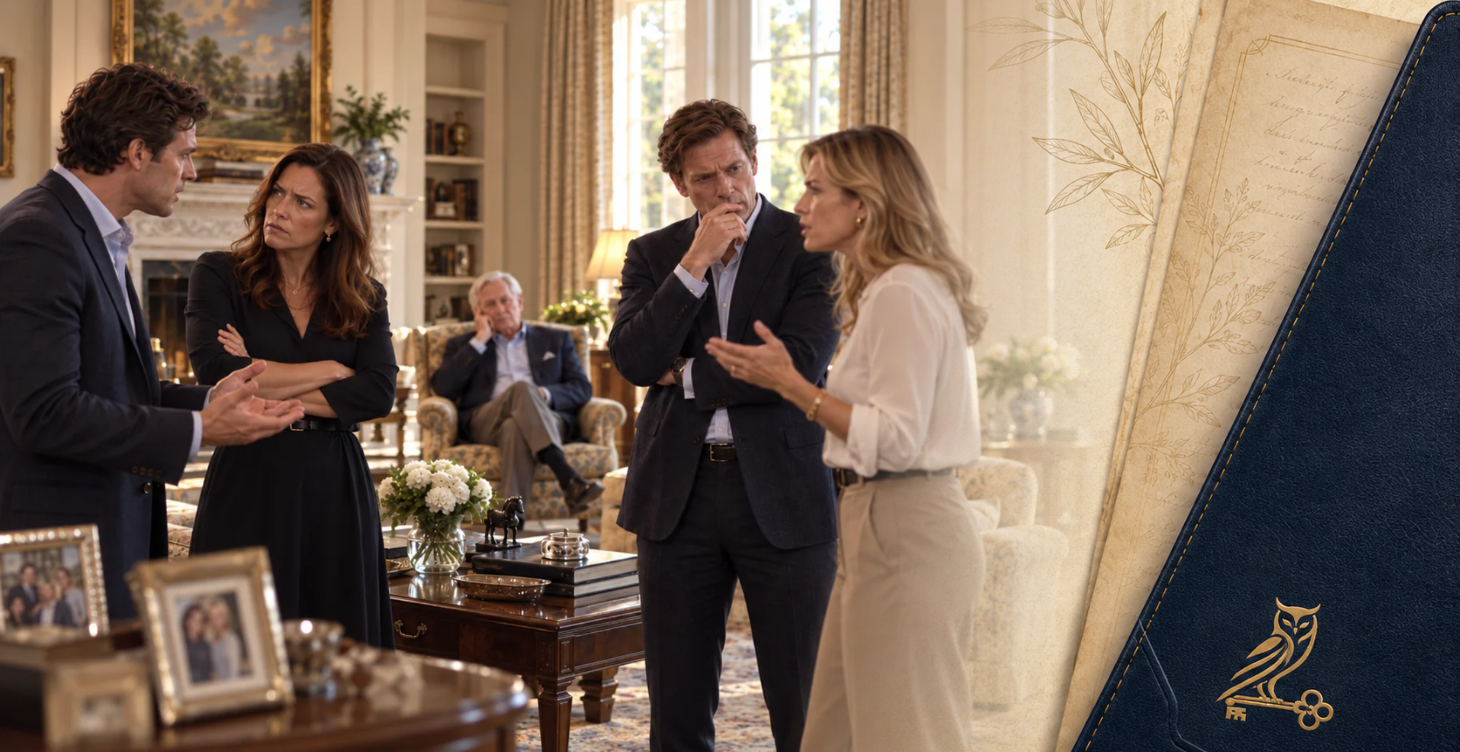

When most families meet with an estate planning attorney, one of the questions sounds simple:
Who are you choosing as trustee?
The problem is that most families answer too quickly.
They name the oldest child.
Or the child who lives closest.
Or the one who seems the most organized.
Or the one who has always been the “responsible one.”
Or the person they love most.
And while all of those answers may feel natural, they are not always wise.
Because choosing a trustee is not just about affection. It is not even just about trust in the emotional sense. It is about choosing someone who can carry real weight under pressure, make difficult decisions fairly, communicate clearly, and protect the people and intentions you care about most.
That is a very different job than being a loving son, daughter, spouse, or sibling.
Why Choosing a Trustee Matters More Than Most Families Realize
A trustee is not a ceremonial title.
A trustee may need to manage assets, follow legal and tax responsibilities, communicate with beneficiaries, respond to conflict, handle unequal distributions, stay organized, and make judgment calls when emotions are already running high.
In other words, the trustee is not just holding paperwork.
They may be holding the emotional center of the family at one of the hardest moments in that family’s life.
That is why this decision shapes more than administration. It shapes outcomes.
A strong trustee can protect your plan, reduce confusion, and help your family stay grounded.
A poorly chosen trustee can turn even a good plan into a long season of strain, resentment, and second-guessing.
Why Choosing a Trustee Often Gets Treated Too Casually
Most families do not make a poor trustee choice because they are careless.
They make it because the question is usually framed too casually.
It gets treated like a form question instead of a leadership question.
Who do you want?
Who is first?
Who should go after you?
And just like that, one of the most consequential decisions in a legacy plan is reduced to instinct.
But a trustee role is not just about who you feel closest to.
It is about whether that person can actually do the job well.
Can they act impartially between beneficiaries?
Can they stay steady when one family member is grieving, another is angry, and another wants an exception?
Can they manage significant financial responsibility without becoming reckless, sloppy, or overwhelmed?
Can they communicate with both clarity and compassion?
Can they handle pressure without making things personal?
Those are the real questions.
Why the Most Loving Choice Is Not Always the Most Obvious One
This is where families often need the most honesty.
The child who loves you deeply may not be the right trustee.
In fact, the person most devoted to your care and well-being may be exactly the one you should think twice about placing in the middle of everything.
Why?
Because that person may already be carrying the heaviest emotional burden.
They may be the one sitting with you in doctors’ offices.
They may be the one managing family emotions.
They may be the one trying to preserve peace.
They may be the one people call first when something goes wrong.
Asking that same person to also interpret your wishes, manage money, communicate decisions, and withstand family tension can be too much.
Not because they are weak.
Because the role is heavy.
Sometimes families confuse love with suitability.
But the fact that someone loves you does not automatically mean they should be put in the most difficult seat at the table.
What a Trustee Actually Needs
A capable trustee usually needs more than good intentions.
They need a rare mix of qualities that not every good person possesses in the same measure.
They need integrity, of course.
But they also need judgment.
They need the ability to stay impartial when beneficiaries want different things.
They need enough financial maturity to respect records, compliance, taxes, and process.
They need enough emotional intelligence to explain decisions without escalating tension.
They need enough resilience to make a hard call even when someone is disappointed.
They need enough humility to seek professional help when the situation is bigger than their expertise.
And perhaps most importantly, they need to be willing.
That last part matters more than families often realize.
Many trustees are named without ever having a real conversation about the role.
A person may technically accept because they feel honored, guilty, or unable to say no. But that is not the same as true readiness.
A trustee who is unaware, uncertain, or privately overwhelmed does not help a family simply because their name appears in the documents.
Better Questions to Ask Before Choosing a Trustee
Instead of asking only, “Who do I trust?” try asking better questions.
Who is actually equipped to carry this role well?
Who can stay fair if beneficiaries disagree?
Who can follow my wishes even if their own emotions are strong?
Who can handle paperwork, process, and pressure without shutting down?
Who would seek help instead of pretending they know more than they do?
Who is willing, able, aware, and practically ready?
What challenges might affect them — distance, work obligations, health issues, existing family friction, or financial inexperience?
Is there a backup plan if they cannot serve?
Those questions do not make the decision harder.
They make it more honest.
Sometimes the Right Structure Is Not One Person
One of the most helpful shifts families can make is this:
Stop assuming the answer must be one person.
Sometimes a family member should not serve alone.
Sometimes a co-trustee structure makes more sense.
Sometimes a professional trustee should be involved.
Sometimes a financial professional or corporate trustee should be paired with a family member for balance.
Sometimes an oversight role or trust protector is wise.
Sometimes the structure for support during life should be different from the structure after death.
The point is not to force complexity for its own sake.
The point is to stop pretending that “just name a person” is enough for every family.
Some families need more support around the role than traditional planning ever acknowledges.
That is not failure. That is realism.
Why Choosing a Trustee Is Also a Family Relationship Decision
Choosing a trustee is never only about administration.
It affects family dynamics in ways people often do not see until much later.
When one child is named and others are not, meaning gets assigned.
When one sibling is placed in the middle of all financial decisions, tension often follows.
When a trustee has to say no to an early distribution, explain unequal treatment, or enforce a structure someone dislikes, the role can become deeply relational, not just technical.
This is why trustee planning should not happen in a vacuum.
The more a family avoids thinking clearly about the human side of the role, the more likely it becomes that the wrong person gets named for the wrong reasons.
And that mistake usually gets discovered at the worst possible time.
A Strong Trustee Relationship Starts Before the Crisis
One of the best things a family can do is have the conversation now.
Before the documents are final.
Before there is a death.
Before there is a medical event.
Before grief and stress take over.
That conversation should include expectations, responsibilities, the family structure, your wishes around distributions, what support is available, and what questions the person has about serving.
A good trustee conversation is not a formality.
It is part of the preparation.
It gives the person a chance to say yes honestly, say no honestly, or suggest a better structure before everyone is relying on assumptions.
That one conversation can prevent years of confusion later.
The Goal Is Not Simplicity. The Goal Is Stewardship.
A trustee decision should not be driven by what feels easiest in the moment.
It should be driven by what gives your family the best chance of clarity, fairness, and stability later.
That may still be a loved one.
But if it is, let that be because they are actually prepared for the role, not because no one slowed down long enough to ask harder questions.
Legacy planning is full of decisions families avoid because they do not want to make things awkward.
This is one of them.
But awkward now is much cheaper than conflict later.
Choosing a trustee well is one of the clearest acts of love a family can make.
Because sometimes the kindest thing you can do is not putting the person you love most in the middle of a role they were never meant to carry alone.
We have a few tools available for you to help you think through your Trustee appointment. Available for immediate download is our Trustee Guide. If you would like to go beyond the Guide, we also have a full training and comprehensive Trustee Appointment Worksheet within the Legacy Lock Toolkit. To learn more about the Legacy Lock Toolkit please click here.