
Most people think the greatest threat to their legacy will come after death.
They assume the danger is probate, taxes, bad investments, or family conflict once they are gone. Those things matter. But after nearly four decades of working with families, I have seen something else matter just as much, and often more.
The greatest risk to a family’s legacy often begins while someone is still alive.
Not after death. Not after a legal declaration of incapacity.
Before that.
It begins in the quiet, in-between season when judgment starts to shift, but legal authority has not. When the person still has every right to make decisions, but those decisions no longer reflect the same steadiness, values, and patterns they lived by for years.
That is why the Legacy Lock Trust exists.

This Did Not Start as a Product
I started in the financial services business before I was even old enough to legally hold a securities license. I grew up watching my own family, good people, educated people, mostly loving people, struggle with money. When my parents argued, money was often at the center of it. I wanted to understand why.
They played by the rules. They did what they were told to do. And still, it seemed like there had to be a better way.
So I went looking for one.
Over the years, I became a Certified Financial Planner, co-built a financial advisory firm, and worked with thousands of families through retirement, illness, loss, transition, and all the decisions that shape what people leave behind. I saw beautiful plans on paper. I saw legal documents signed correctly. I saw families who did “everything right.”
And I also saw those same families get blindsided.
Not always by markets. Not always by taxes. Not always by death.
Often by a slow change no one quite knew how to name.
The Problem Most Families Miss
The people I served were often in their fifties, sixties, and seventies when we first met. Many of them felt like parents and grandparents to me. They had built lives worth admiring. They had worked hard. They had raised families. They had values. They had discipline.
And then, over time, I watched something subtle happen.
They did not suddenly become incompetent.
They did not collapse.
They did not wake up one day unable to function.
They simply changed.
A little more rigid. A little more reactive. A little less flexible. More easily wounded. More emotionally driven in moments that once would have passed quietly. Sometimes they even sounded more certain, more forceful, more convinced than before.
That is part of why families miss it.
The change can be real without being dramatic. It can matter deeply without looking like a medical emergency.
I did not always have language for that. Now I do.
I call it decision drift.
How Financial Dignity Gets Lost
When I talk about protecting financial dignity, I am not just talking about avoiding fraud. I am talking about protecting the ability to make decisions that still reflect your lifetime values.
In my experience, financial chaos almost always traces back to three areas:
Spending.
Investing.
Giving.
That is where things start to go sideways.
I have watched careful people overspend in ways that made no sense. I have watched others become so fearful that they underspent to the point of neglecting their own comfort and care.
I have watched disciplined investors suddenly take reckless risks. I have watched anxious people pull out at the worst possible moment and lock in losses they never recovered from.
I have watched thoughtful givers begin making major gifts based on emotion, pressure, or a passing story rather than a long pattern of conviction.
I have watched beneficiaries get changed in moments of hurt.
I have watched permanent decisions get made inside temporary emotional states.
And none of that required a diagnosis.
That is the part too many systems ignore.
The Gray Zone Changes Everything
Our legal and financial systems are built to respond to extremes. They know what to do if someone dies. They know what to do if someone is declared incapacitated. They know what to do if a court steps in.
But most family damage does not begin there.
It begins in the gray zone.
That space between “perfectly fine” and “clearly impaired.”
That space where something is off, but not off enough to trigger formal intervention.
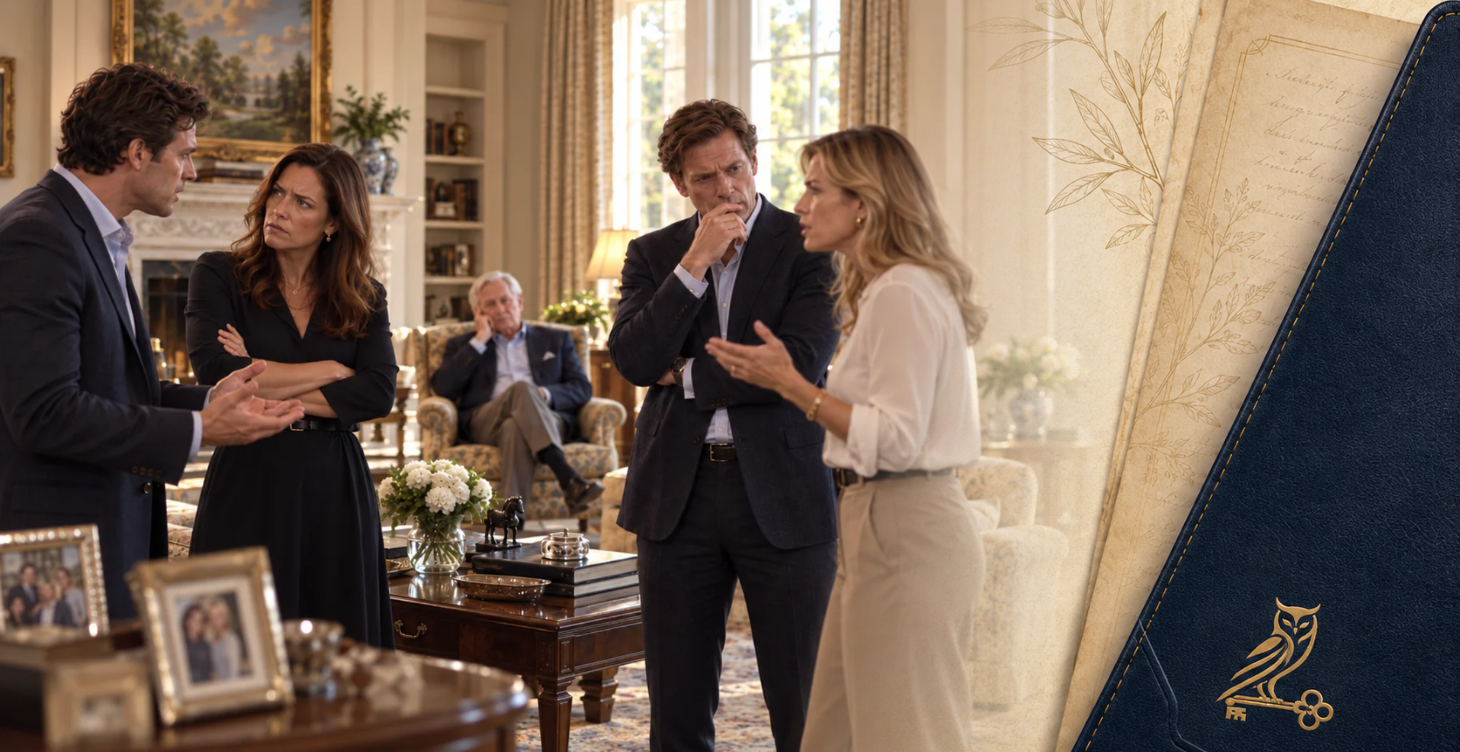
That space where the family feels it, but does not know how to talk about it.
That space where children do not want to embarrass a parent, parents do not want to feel controlled, and professionals are often limited in what they can do.
The result is predictable. Everyone waits too long.
By the time the checkbook is taken away, the damage is already done.
Estate Planning and Legacy Planning Are Not the Same
This is where I believe families need a new category.
Estate planning is necessary. It matters. But estate planning is largely designed to answer one question: what happens after I die?
Legacy planning asks a different question: how do I preserve my values, my dignity, my relationships, and my intentions while I am still alive?
That is a completely different conversation.
Estate planning prepares you to die.
Legacy planning prepares you to live well, and hand things off well.
The Legacy Lock Trust was built on that distinction.
It was not designed to be a prettier document or a more impressive binder.
It was designed to solve for the problem I kept seeing repeated: people needed support before a crisis, not only after one.
What Makes the Legacy Lock Trust Different
At its core, the Legacy Lock Trust exists to protect financial dignity during life, not just distribute assets after death.
That means it is built to introduce thoughtful guardrails into the gray zone.
It creates a structure for oversight without humiliation.
It creates a path for support without forcing a sudden loss of voice.
It asks better questions about who should be involved, when help should increase, and how decisions should be evaluated when emotions are high and judgment may be narrowing.
It recognizes that one of the most loving things a person can do is protect their future self from a bad season, a reactive decision, or a moment of hurt.
This is not about taking power away.
It is about putting wisdom around power while you still have the clarity to do it.
Why This Matters So Much to Me
I have sat with widows who discovered the damage after the fact.
I have sat with adult children who stopped speaking to one another because there was no structure for what happened in the years before incapacity.
I have sat with people who knew something was changing but had no language, no plan, and no dignified way to respond.
That is why Legacy Lock exists.
Aging With Clarity gives families language.
The Toolkit gives them structure.
The Legacy Lock Trust gives those intentions something stronger than good hopes.
It gives them design.
If you value your independence, do not wait until a crisis forces someone else to define what help looks like.
Decide it while you are clear.
Build it while you still have your full voice.
Protect your future relationships while you still have the chance.
That is why the Legacy Lock Trust exists.
If you would like to learn more about the Legacy Lock Trust please visit this page.